

20 Creative Friendsgiving Games for Your Next Friendsgiving Party
Friendsgiving is usually a little less formal than Thanksgiving, which makes it the perfect occasion for games that get everyone talking, laughing, and actually participating. You don’t need a packed schedule or a living room full of party supplies, either. The best Friendsgiving games can work around the dinner table, between courses, or after dessert when everyone has settled in.
The ideas below mix silly challenges, conversation games, trivia, creative contests, and lighthearted competitions. Some take almost no preparation, while others give you an excuse to gather a few simple supplies before guests arrive. You can choose games based on your group, or keep several ready so the evening can evolve naturally. The goal isn’t to turn dinner into a competition—it’s to create those spontaneous moments everyone remembers afterward.

Friendsgiving Superlatives
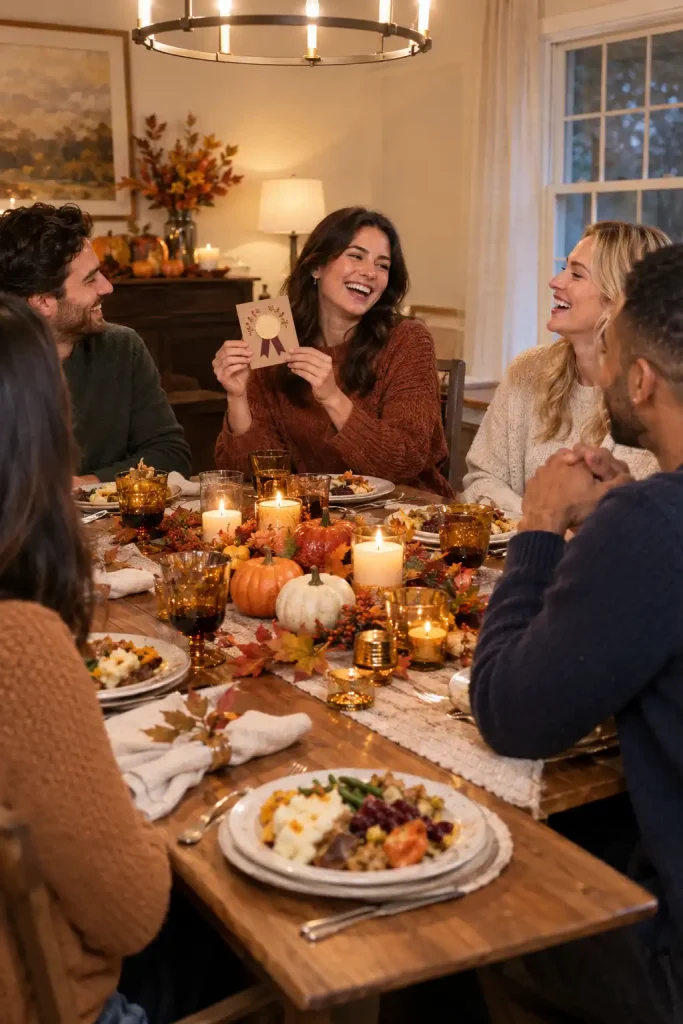
Turn the group into a friendly awards ceremony with categories created specifically for your friends. Think “Most Likely to Bring Three Desserts,” “Best Storyteller,” “Most Competitive Guest,” or “Most Likely to Arrive With a Plus-One.” Write each category on a card and let everyone vote anonymously before revealing the winners.
Keep the awards playful rather than embarrassing. Small paper certificates, ribbons, or inexpensive seasonal treats can serve as prizes. You can also ask guests to invent one superlative during the evening. This works especially well when your group has known each other for years because the jokes become increasingly specific.
Thanksgiving Movie Quote Challenge
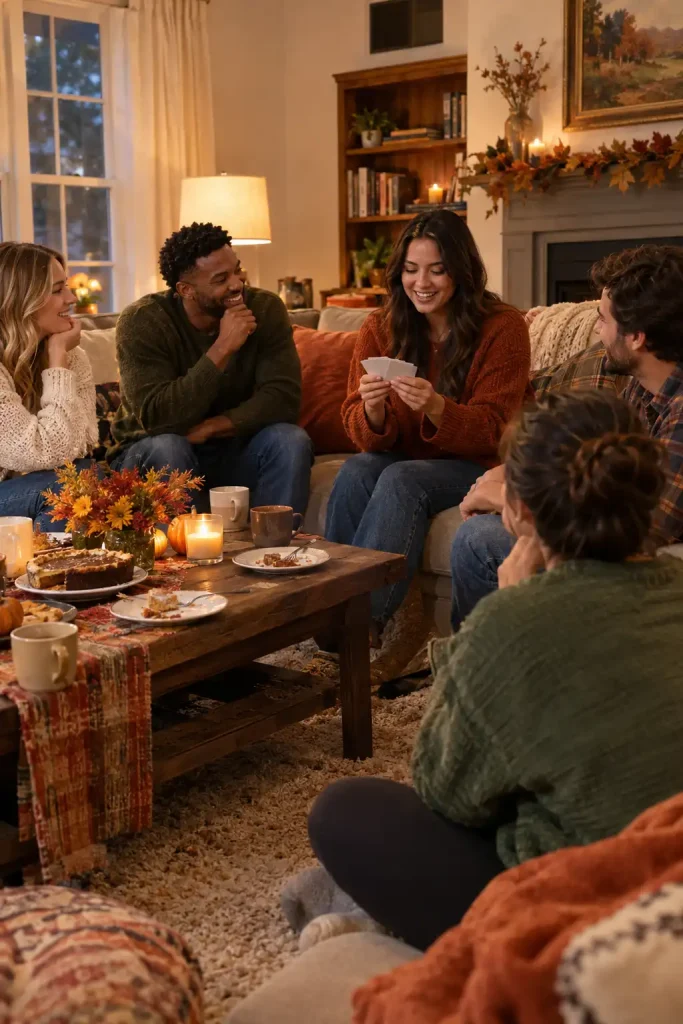
Choose a collection of memorable Thanksgiving or fall-themed movie quotes and challenge guests to identify the movie. For a broader game, include a few quotes from popular comedies, family movies, and classic seasonal films rather than making the entire quiz dependent on one genre.
Read each quote aloud without giving away the character or title. Guests can write their answers on scraps of paper, use a shared scorecard, or simply call them out if your group enjoys a louder game. Award one point for the movie and an optional bonus point for naming the character.
The game works particularly well after dinner when everyone is relaxed. Keep the quotes short and recognizable so the challenge stays fun instead of becoming an obscure film trivia test.
Thanksgiving Trivia Relay
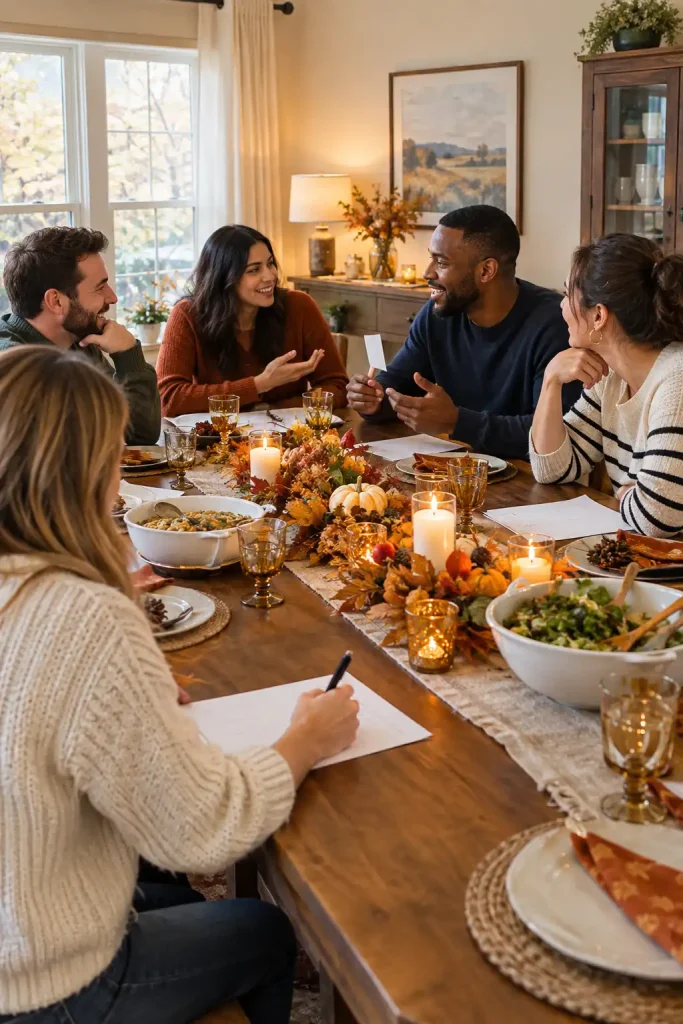
Divide guests into two or three teams and prepare short rounds of Thanksgiving-themed trivia. Questions can cover food traditions, seasonal customs, famous films, American history, autumn facts, or fun facts about the guests themselves.
The relay format keeps everyone involved because each team must choose a different person to answer each question. Give teams a minute to discuss before locking in an answer. You can also create a final lightning round where answers have to be given quickly.
A simple handwritten scoreboard is enough. The best version isn’t necessarily the hardest; mix easy questions with a few surprises so every guest has a chance to contribute.
The Leftover Recipe Challenge
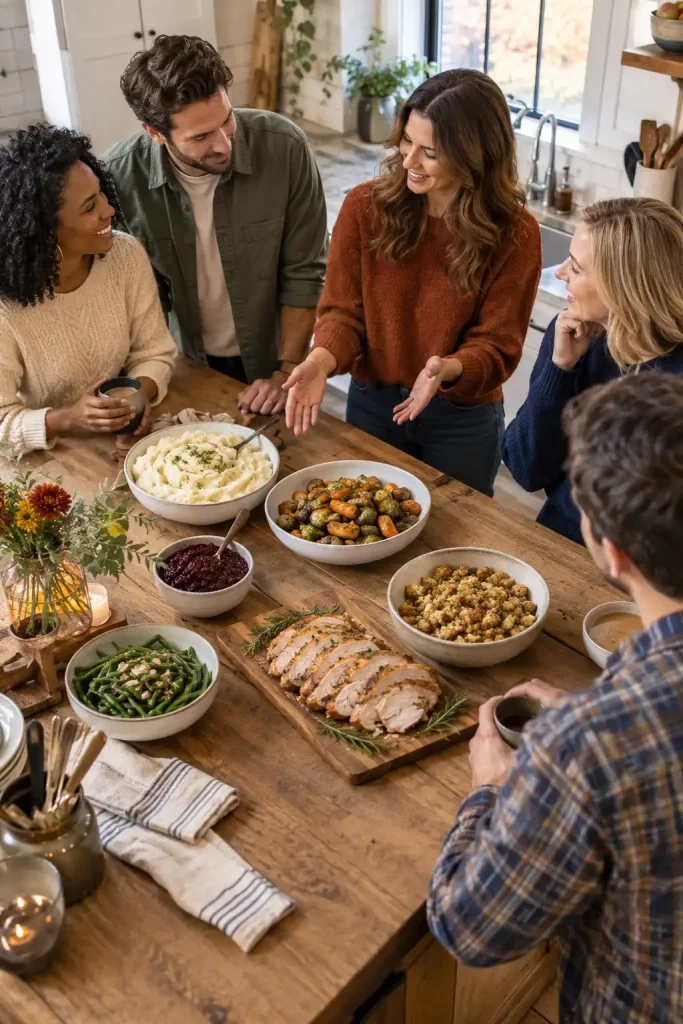
Give each team or individual a fictional basket of common Thanksgiving leftovers and challenge them to invent a creative next-day meal. Guests might combine turkey, mashed potatoes, cranberry sauce, stuffing, or roasted vegetables into a sandwich, breakfast dish, bowl, or completely unexpected creation.
You don’t have to cook the results for this game to work. Have everyone pitch their recipe and explain its name, ingredients, and ideal serving occasion. If your group loves cooking, take it one step further by actually preparing a small tasting portion.
This game is especially entertaining because the ideas can range from genuinely delicious to hilariously questionable. A judging panel can award categories such as “Most Practical,” “Most Creative,” and “Would Actually Make Again.”
Two Truths and a Turkey Tale
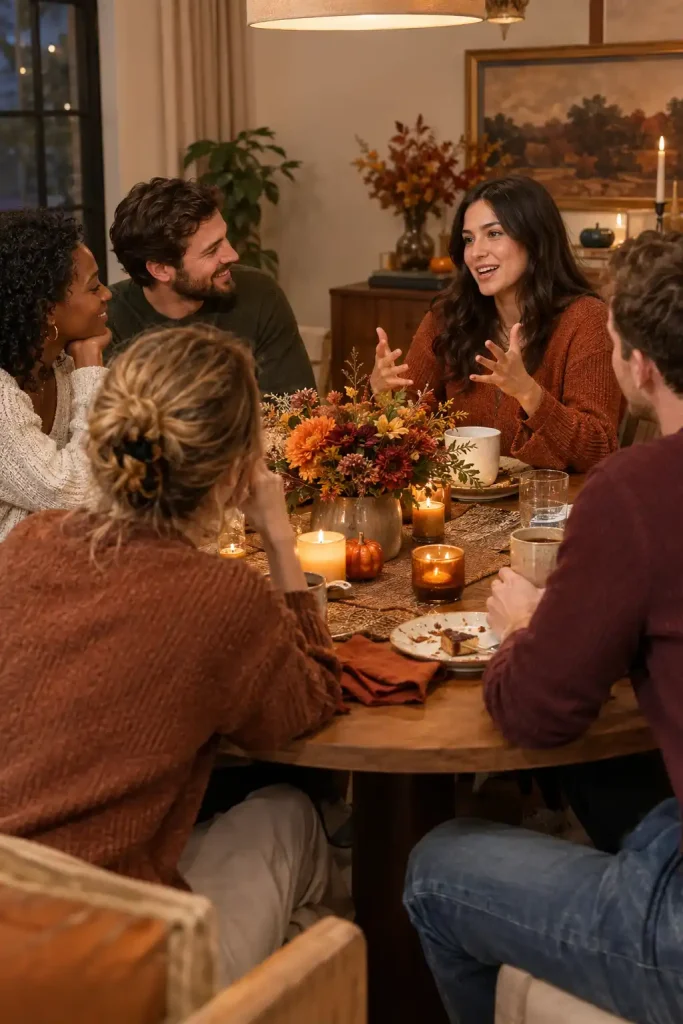
Give the classic Two Truths and a Lie a Friendsgiving twist. Each person shares three statements about themselves, with one being made up. Encourage guests to tell stories involving past Thanksgivings, unusual family traditions, travel, cooking mishaps, or memorable gatherings.
The seasonal theme gives people an easy starting point without requiring every statement to be Thanksgiving-related. After someone shares, everyone votes on which statement they think is the lie.
For a larger group, divide guests into pairs first and have partners introduce one another’s three statements. That adds an extra layer of guessing and helps quieter guests feel more comfortable participating.
Thanksgiving Charades

Put a seasonal spin on charades with prompts inspired by Thanksgiving foods, traditions, movies, autumn activities, and familiar holiday moments. A player silently acts out a prompt while their team races to guess it.
To make the game easier to organize, write prompts on small folded cards and place them in a bowl. Use separate rounds for food, movies, activities, and “awkward family moments.” The last category can generate some of the biggest laughs.
Clear floor space is useful, but you don’t need a huge room. A living room beside the dining area can work perfectly well, especially if guests take turns rather than playing simultaneously.
The Gratitude Guessing Game

Ask every guest to anonymously write down something they’re grateful for. Collect the notes, mix them together, and read them aloud one at a time while everyone tries to guess who wrote each one.
The responses can be sincere, funny, specific, or unexpectedly sentimental. Encourage guests to write something distinctive rather than simply saying “my family” so the guessing portion has some personality.
This game gives the evening a quieter moment without becoming overly formal. It can also be a thoughtful way to include guests who aren’t interested in competitive games.
Who Knows the Host Best?
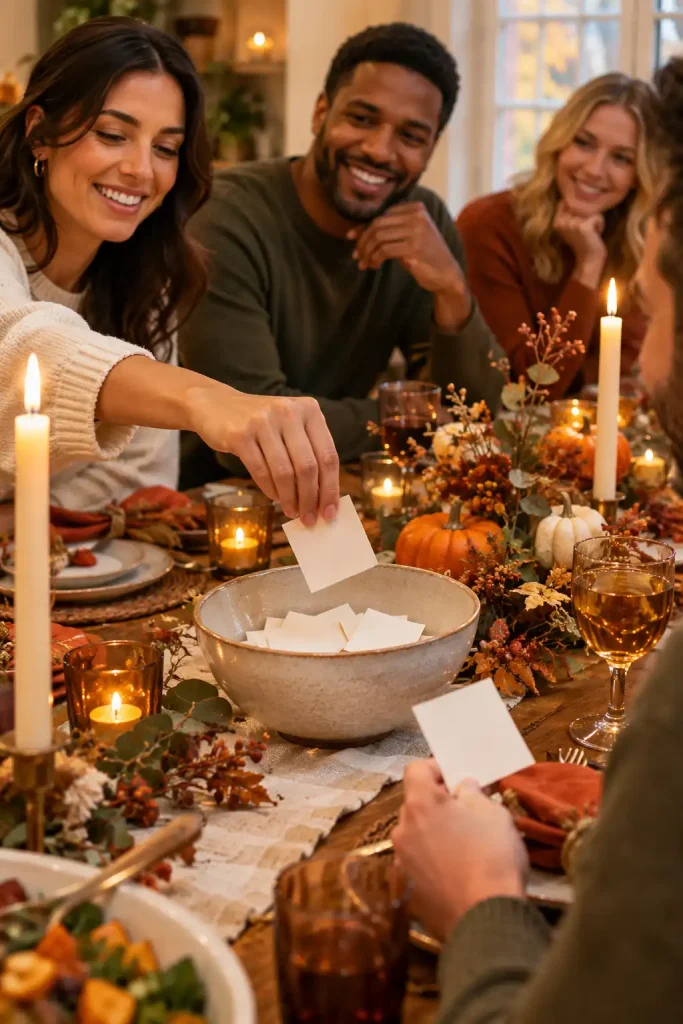
Create a short quiz based entirely on the host. Ask questions about favorite foods, dream destinations, childhood habits, go-to movie, coffee order, funniest habit, or what they would bring to a deserted island.
The host keeps the answer key, while guests compete individually or in teams. Keep the questions light and avoid anything that could make someone uncomfortable.
This game works particularly well when Friendsgiving is being hosted by someone who enjoys the spotlight. For a more collaborative version, have guests work together to predict the host’s answers before the host reveals them.
Pumpkin Decorating Speed Round
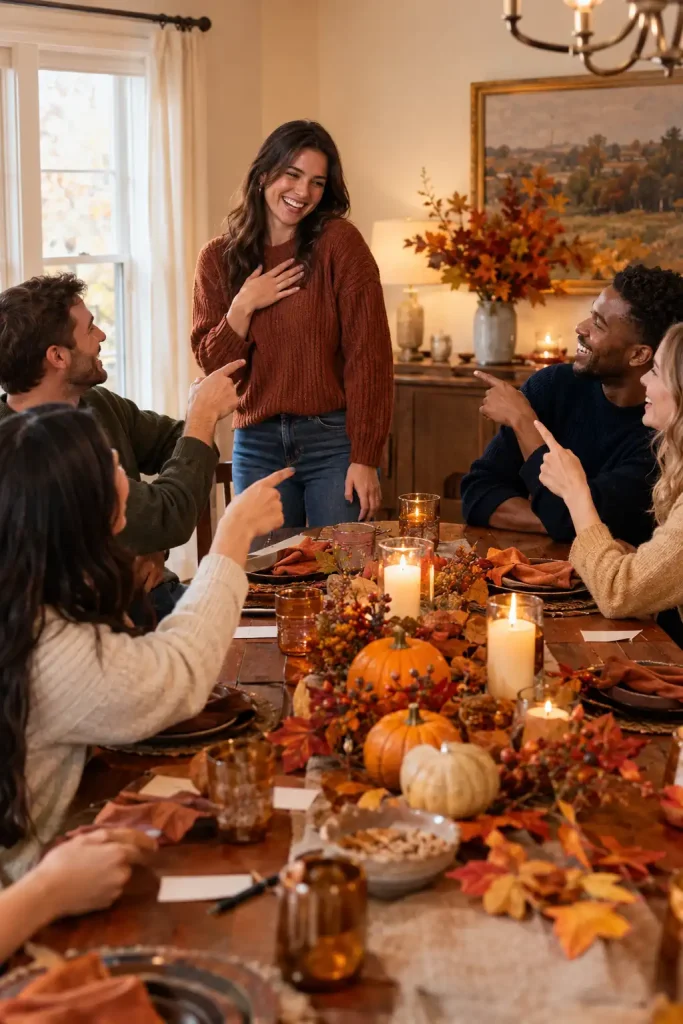
Give each player a small pumpkin, markers, craft supplies, or removable decorative pieces and set a short timer. Challenge everyone to create a Thanksgiving-themed design before time runs out.
The fun comes from the time limit, so don’t overcomplicate the supplies. Ten or fifteen minutes can be enough for simple faces, patterns, seasonal characters, or abstract designs.
At the end, let everyone vote on categories such as funniest pumpkin, most creative design, best traditional look, or most likely to become Thanksgiving decor next year. Use washable or removable materials if you want to keep the pumpkins intact.
The Thanksgiving Drawing Game
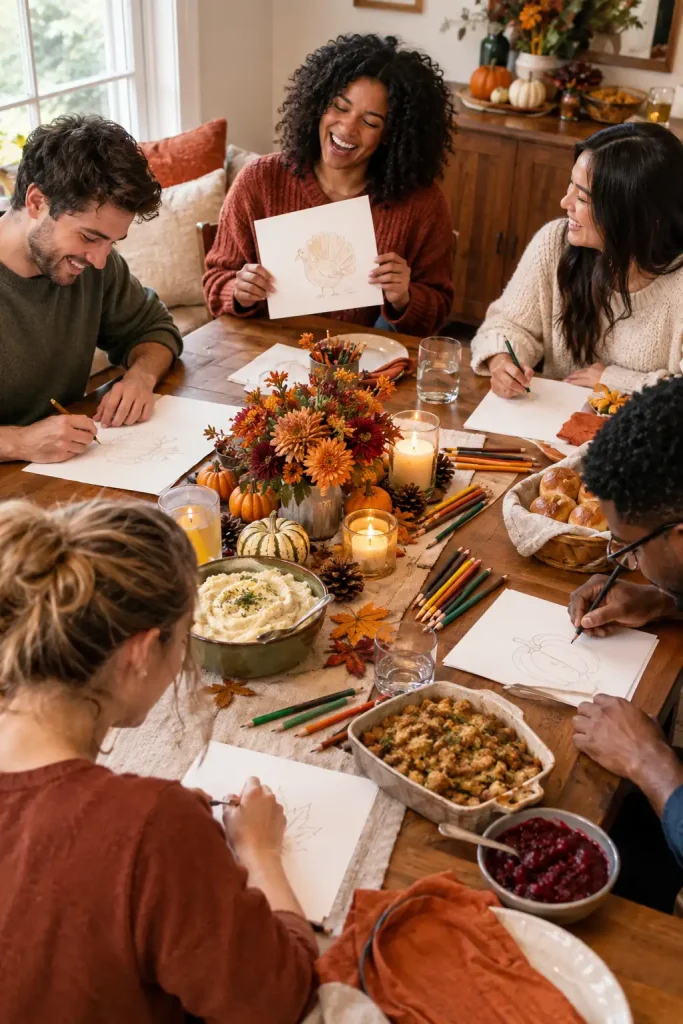
Give everyone paper and a pencil, then announce a Thanksgiving-related object to draw. The catch is that the drawing must be completed within a short time limit.
For a more competitive version, have players draw the same object and let everyone vote anonymously on the funniest, most recognizable, or most creative result. You can also introduce unusual prompts such as “a turkey hosting Friendsgiving” or “Thanksgiving dinner on the moon.”
No artistic ability is necessary, which is precisely why this game works. The intentionally imperfect drawings become part of the entertainment.
Friendsgiving Bingo
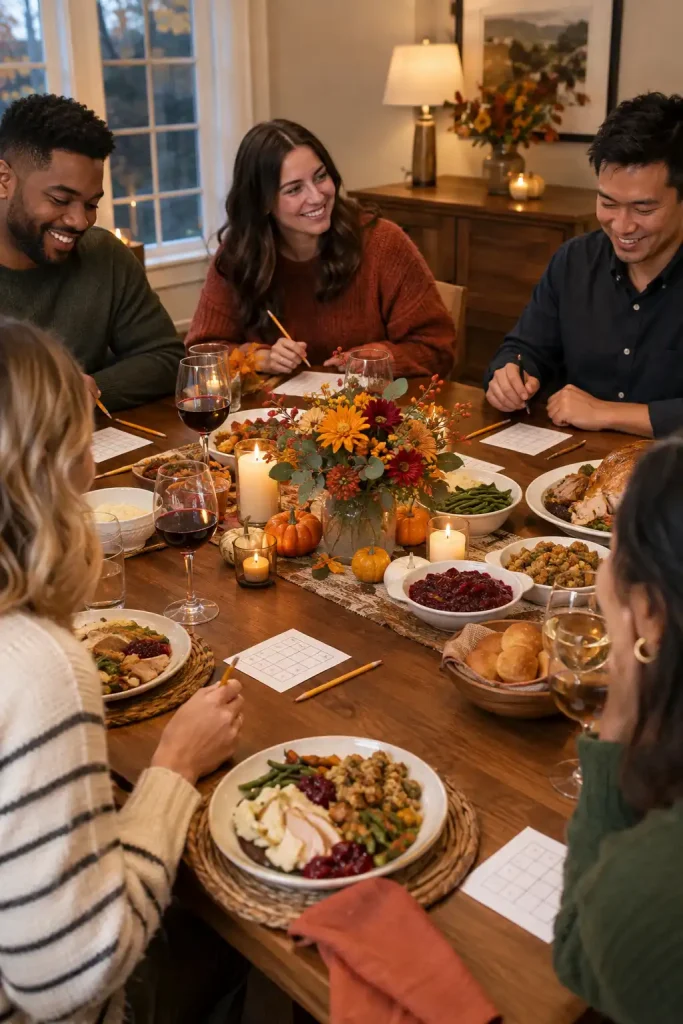
Create bingo cards filled with things that might happen during your gathering instead of traditional numbers. Squares could include “someone asks for the recipe,” “someone goes back for seconds,” “a funny childhood story is told,” or “someone mentions leftovers.”
The game runs quietly in the background while dinner continues, making it a good option for groups that don’t want to stop the party for a formal activity. The first person to complete a row calls bingo.
For a more personal version, customize the squares around your friend group. Just keep the prompts harmless and avoid turning anyone’s awkward habits into the target of the joke.
Name That Thanksgiving Song
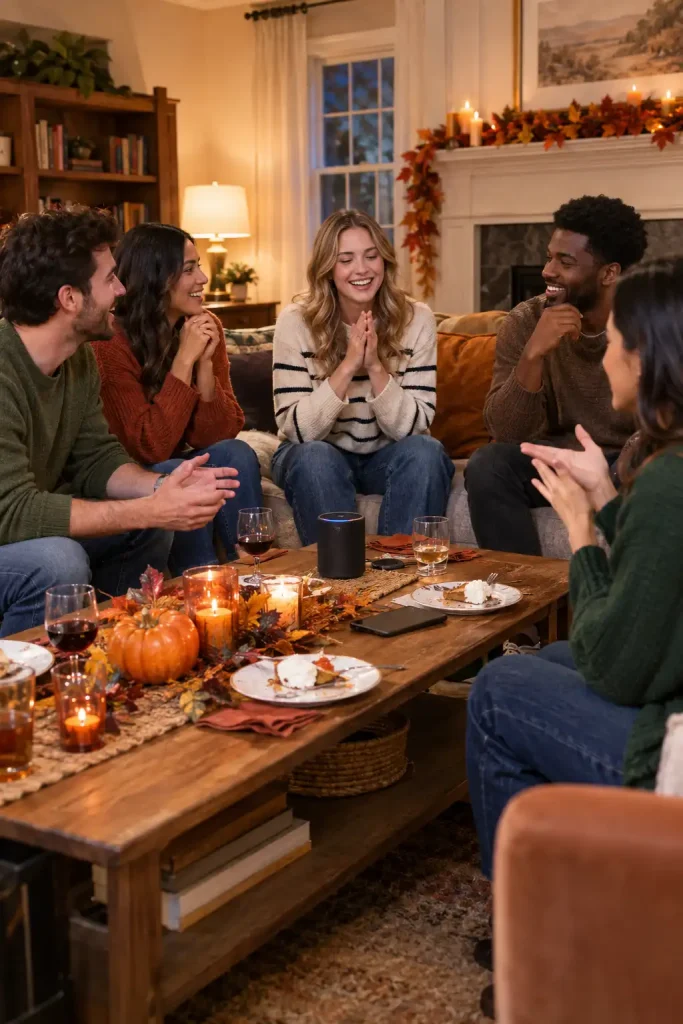
Build a playlist of songs that remind your group of fall, Thanksgiving, road trips, family gatherings, or favorite memories. Play only a short opening section and ask guests to identify the song.
You can make the game individual or team-based. For an added challenge, include songs from different decades so guests have to rely on more than their usual playlists.
Keep the music at a comfortable volume between rounds so the game feels like part of the party rather than a formal trivia competition. A simple phone and speaker setup is all you need.
The Great Pie Taste-Off

Turn dessert into a blind tasting competition. Cut several pies or bite-sized dessert samples into similar portions and have guests taste them without knowing which is which.
You can compare classic flavors, homemade and bakery-style versions, or completely different pies. Give everyone a scorecard with categories such as flavor, texture, crust, and overall favorite.
For a relaxed Friendsgiving, don’t make the judging too serious. The point is to notice everyone’s different preferences and discover which dessert disappears fastest once the tasting ends.
Thanksgiving Would You Rather?
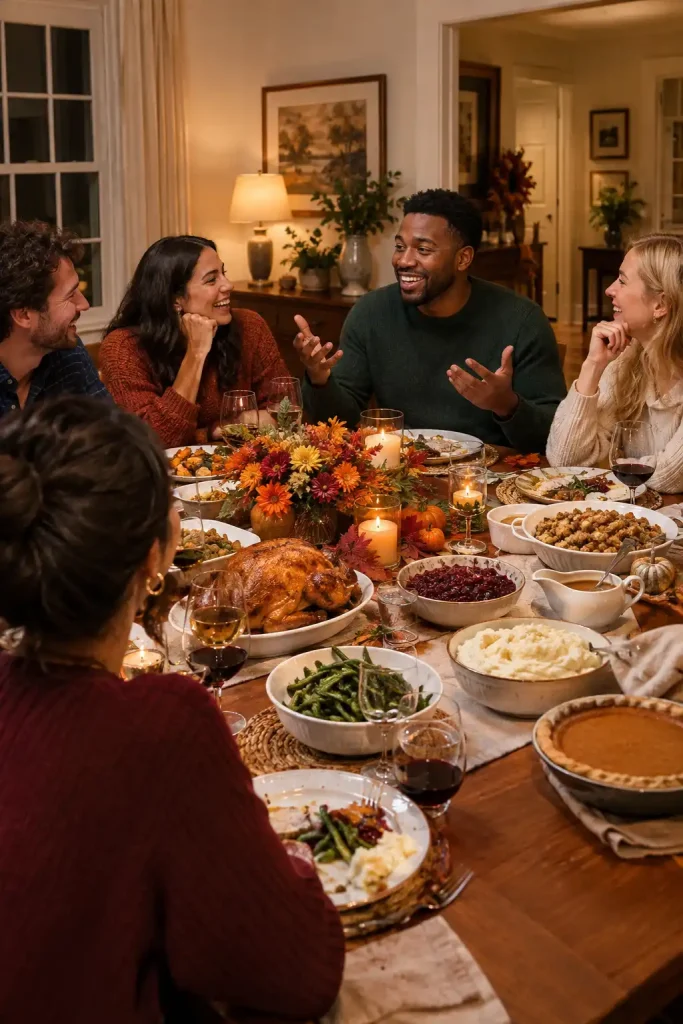
Prepare a list of playful Thanksgiving-themed “Would You Rather?” questions. Examples include choosing between cooking the entire meal or doing all the cleanup, eating only sides or only dessert, or hosting a huge dinner versus attending someone else’s.
The game requires no supplies and can happen naturally around the table. Ask one question at a time and have everyone explain their choice if they want to.
For bigger groups, let guests take turns inventing questions. The explanations are often more entertaining than the answers, especially when friends discover surprisingly strong opinions about stuffing, pie, or leftovers.
The Memory Jar
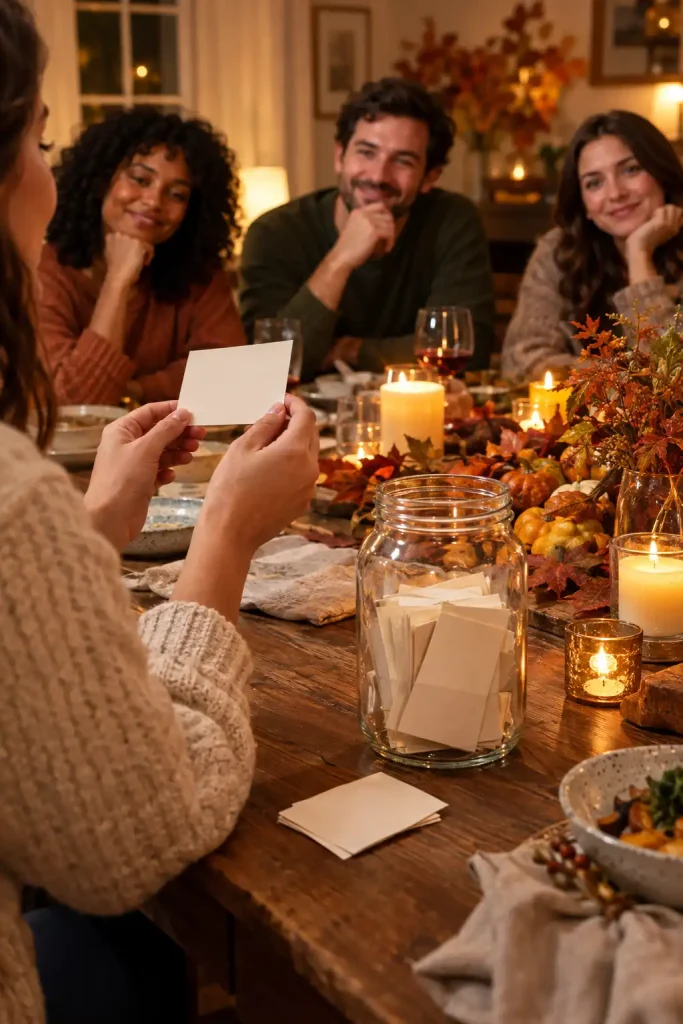
Set out a jar and small blank cards. Ask guests to write down a favorite memory involving someone at the table, a past gathering, a funny adventure, or a moment they still laugh about.
Read the cards anonymously throughout the evening and see whether the group can identify the person or event being described. This turns a simple game into a collection of stories that guests can revisit later.
You can make the activity completely spontaneous or give everyone one card when they arrive. The latter works especially well if you want the jar to include memories from people who aren’t naturally inclined to speak up during group conversations.
Thanksgiving Scavenger Hunt
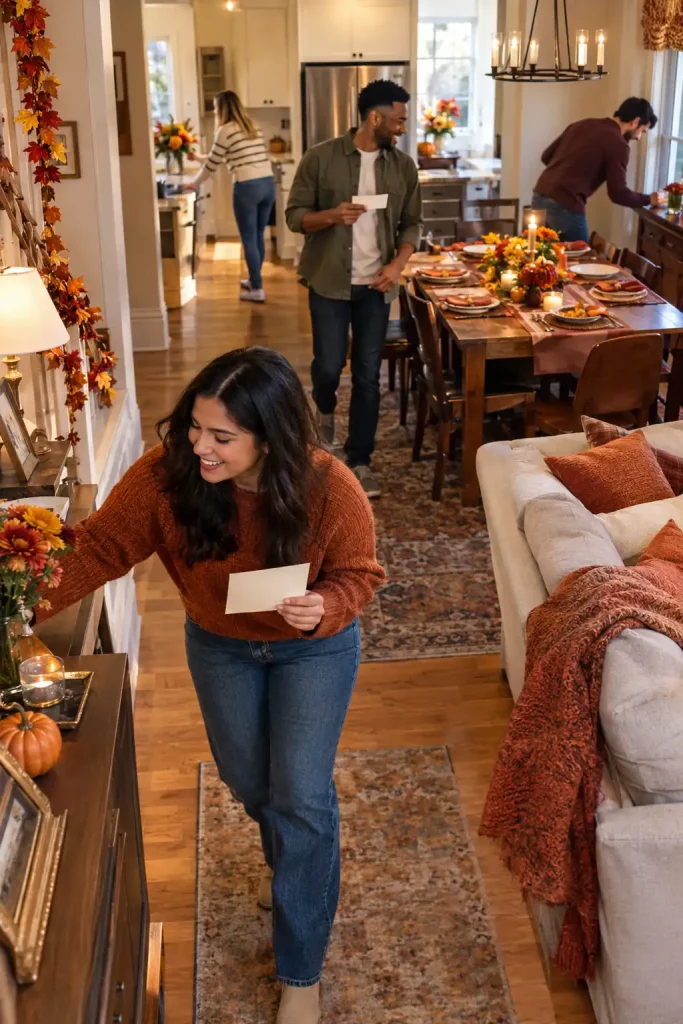
Create a short indoor scavenger hunt using ordinary objects and seasonal details around the house. Guests might search for something orange, a wooden spoon, a cozy blanket, an item older than the host, or something that reminds them of fall.
For adults, add clue-based challenges rather than simply asking participants to find objects. A clue might lead guests from the dining room to the kitchen and eventually to a small prize.
Keep the hunt contained to areas guests are actually welcome to explore. Five to ten clues are usually enough for a casual party, especially when dinner and conversation remain the main event.
The Thanksgiving Family Feud

Create your own mini version of a survey-based guessing game. Before Friendsgiving, ask a handful of friends questions such as “Name a Thanksgiving side people secretly don’t like” or “Name something guests forget to bring.” Use the most common answers as the responses teams have to guess.
The homemade format makes this game especially flexible. You can tailor every question to your friend group, local traditions, or Thanksgiving habits.
Keep rounds quick so everyone gets a turn. A simple scoreboard on paper is enough, although a designated host can also keep track verbally.
Build the Ultimate Friendsgiving Playlist
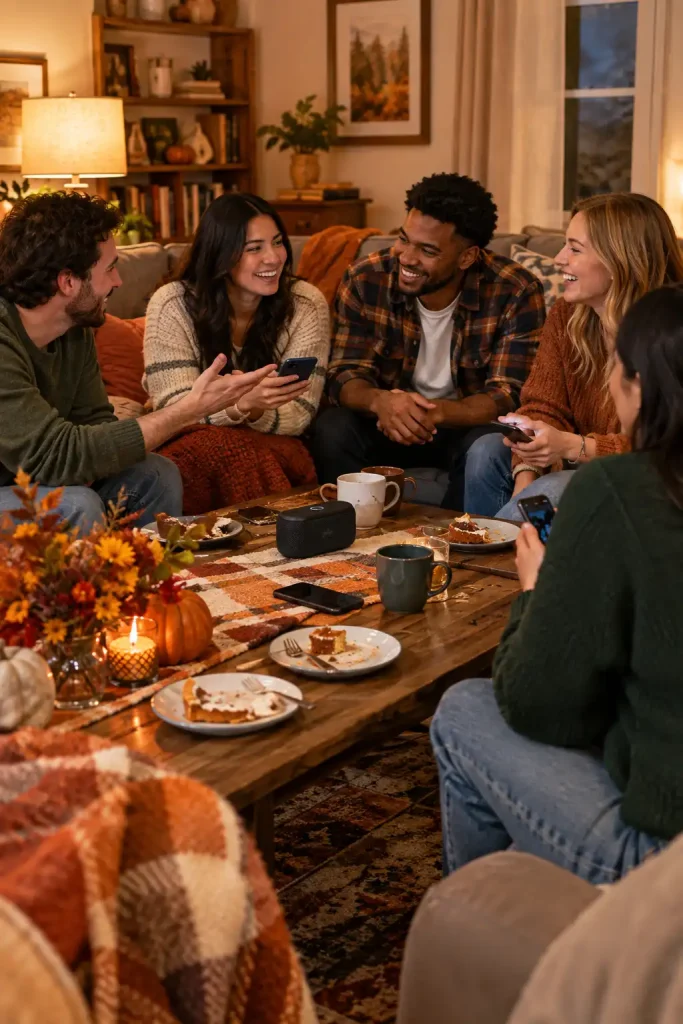
Make playlist creation itself the game. Give everyone a few minutes to choose songs for specific categories such as “arrival music,” “cooking soundtrack,” “dessert,” “late-night hangout,” or “song everyone will sing along to.”
Each guest explains one or two selections, and the group votes on which songs make the final playlist. By the end of the evening, you’ve created a soundtrack that actually reflects the people at the party.
This is especially useful for larger gatherings because guests can contribute without having to perform or compete directly.
Guess the Guest
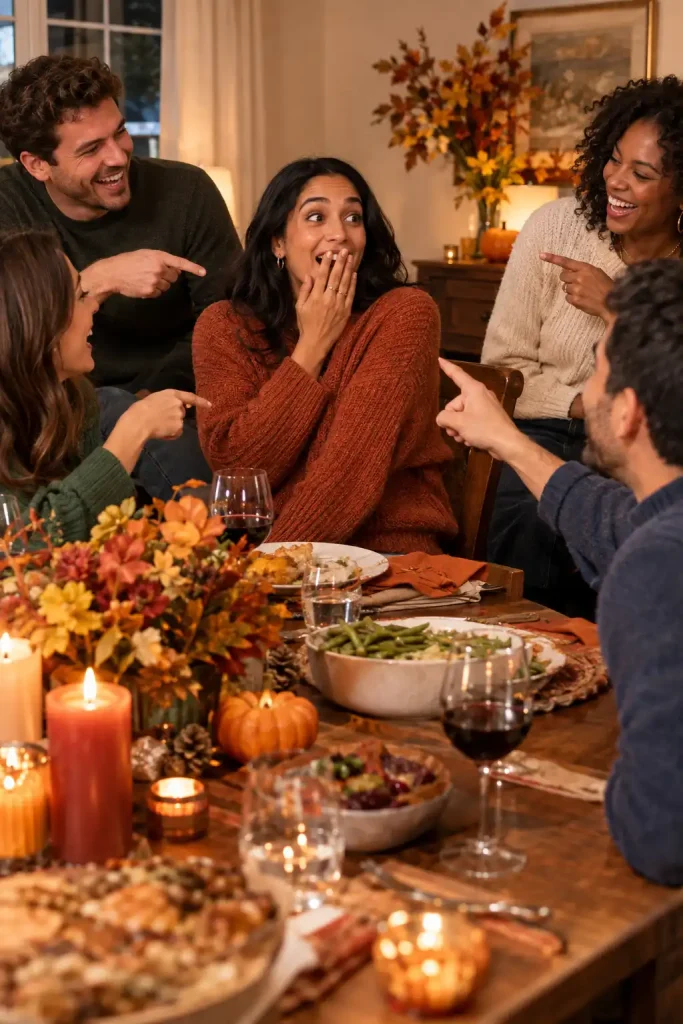
Ask each guest to anonymously submit one unusual fact about themselves before the party. Collect the facts and read them aloud throughout the evening while everyone tries to identify the person behind each statement.
The best facts are surprising but not deeply personal. Someone might reveal that they once appeared on local television, hates a popular food, can play an unusual instrument, or has an unexpected hobby.
You can make the game more challenging by requiring everyone to write their guess before the answer is revealed. It also makes a useful icebreaker when the guest list includes people meeting for the first time.
The Great Friendsgiving Awards

End the evening with a lighthearted awards ceremony based on moments from the party itself. Give awards such as “Best Story of the Night,” “Most Helpful Sous-Chef,” “Dessert Champion,” “Best Laugh,” “Most Competitive Player,” or “First to Ask for Leftovers.”
Unlike superlatives, these awards can reference things that actually happened during your Friendsgiving. That makes them feel personal without requiring elaborate preparation.
Use handwritten certificates, small ribbons, or inexpensive seasonal prizes if you want a physical keepsake. Most importantly, make sure every award is positive so the final game leaves everyone feeling included.
